Baby Diaper
Best Baby Diaper for Monsoon: How to Keep Your Baby Dry, Comfortable and Leak-Free
Best Baby Diaper for Monsoon: How to Keep Your Baby Dry, Comfortable and Leak-Free
In this article: Quick answer · Why monsoon is hard on baby skin · What to look for · Size and overnight use · Monsoon tips · FAQs
Quick answer: The best baby diaper for monsoon is breathable, absorbs quickly and fits your baby's weight without gaps or rubbing. Humid weather adds sweat to wetness, which raises the risk of leaks, rashes and irritation. A breathable back sheet, a fast-absorbing core, strong leak barriers and timely changes keep your baby drier and more comfortable.
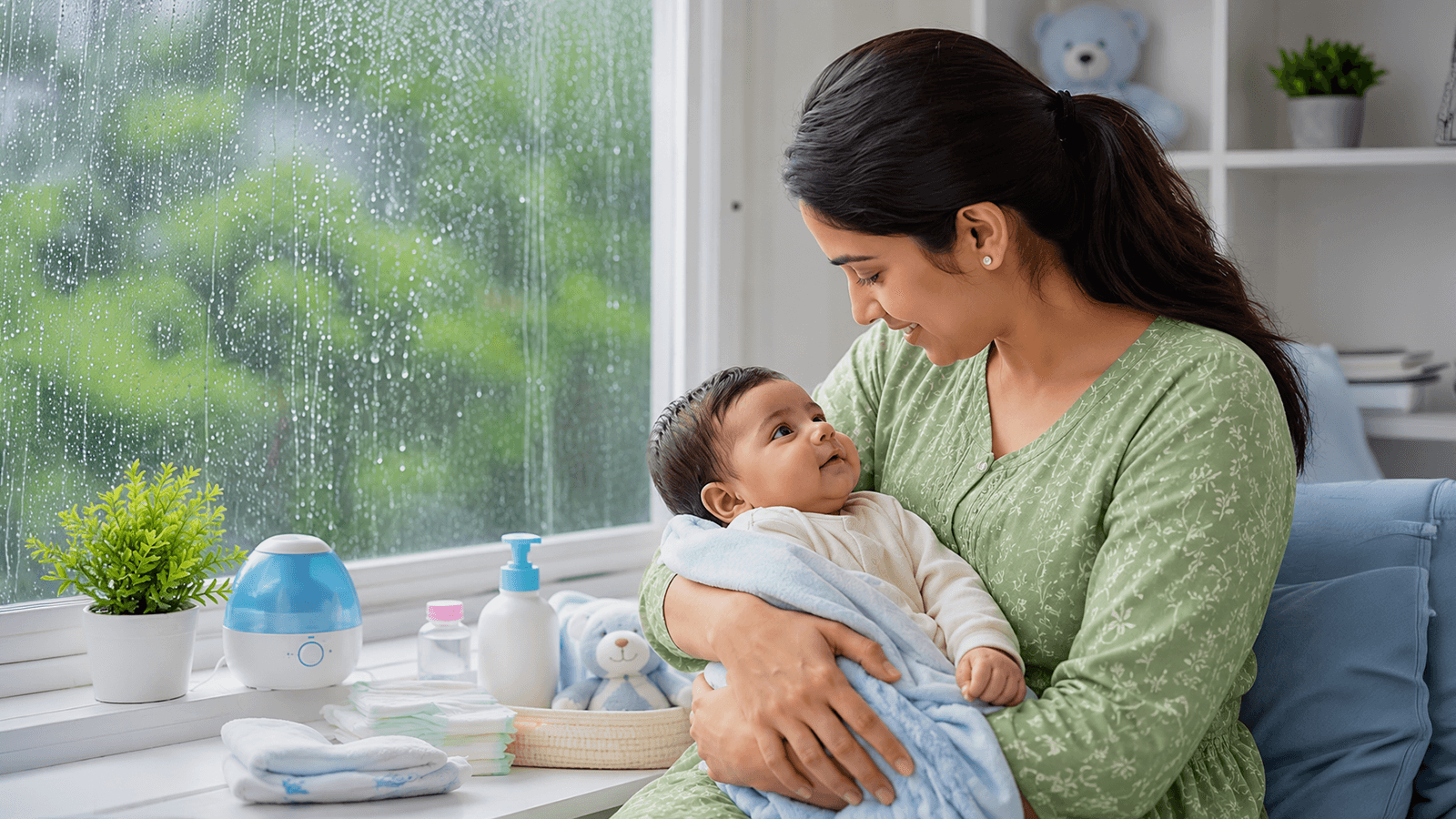
The rain is lovely to watch from the window, but inside the diaper it's a different story. Clothes take forever to dry, the air feels heavy, and your baby is sweaty, fussy and harder to settle. If you've been changing more often and still seeing redness, you're not alone. Monsoon is simply one of the toughest seasons for a baby's skin.
Why Monsoon Is Hard on Your Baby's Skin
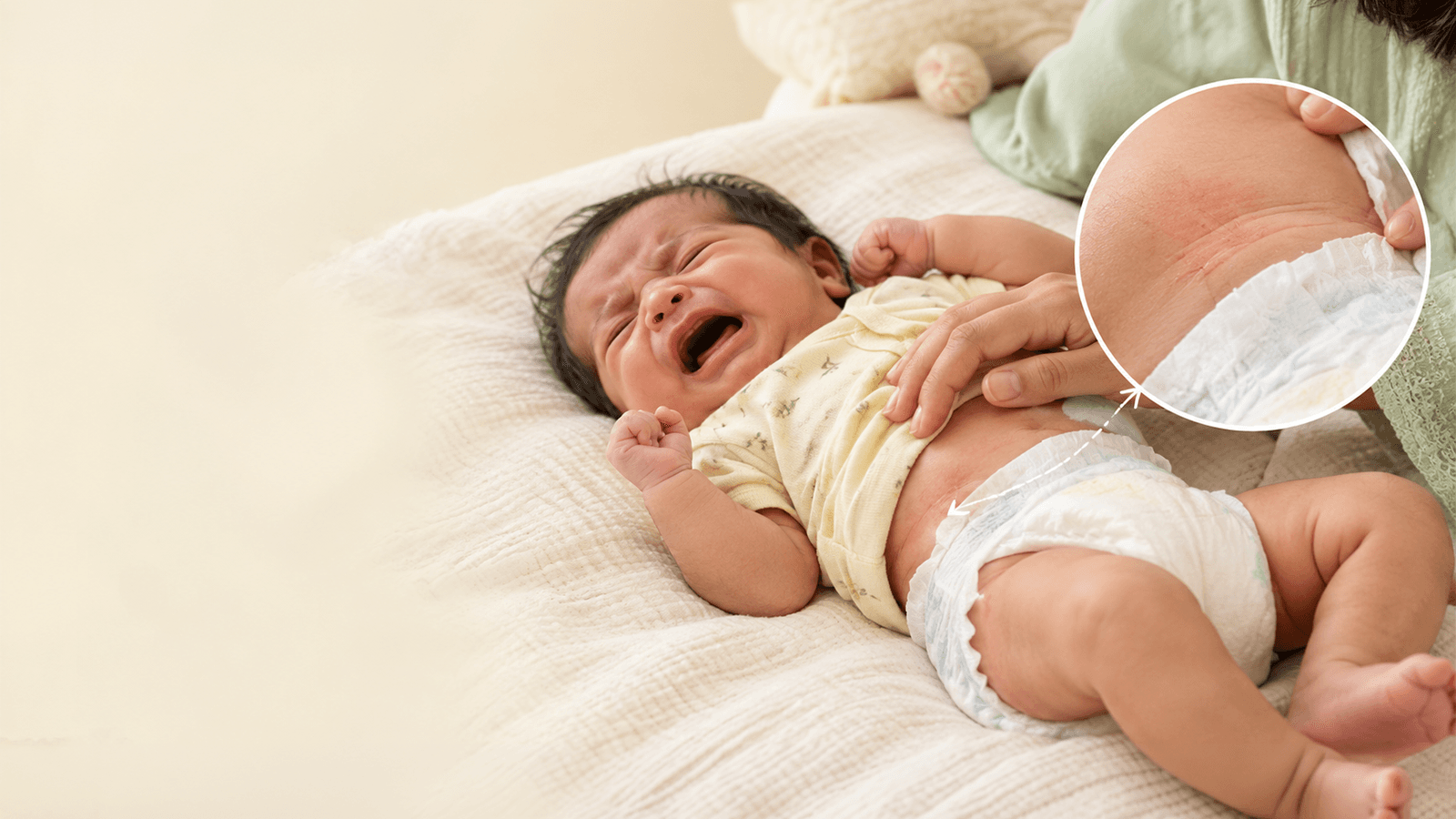
In monsoon, humidity stays high all day. Your baby sweats more, and that sweat adds to the wetness already inside the diaper. With so much moisture around, the skin stays damp and warm for longer, and the diaper can feel heavy and uncomfortable. Mayo Clinic notes that prolonged contact with wetness is a common trigger for diaper rash. Damp skin also rubs more easily, so leaks, rashes and irritation become more likely in this season.
What to Look for in the Best Baby Diaper for Monsoon
To cope with humidity, a diaper needs three things working together: breathability, fast absorption and the correct fit.
Breathability to Let Heat Escape
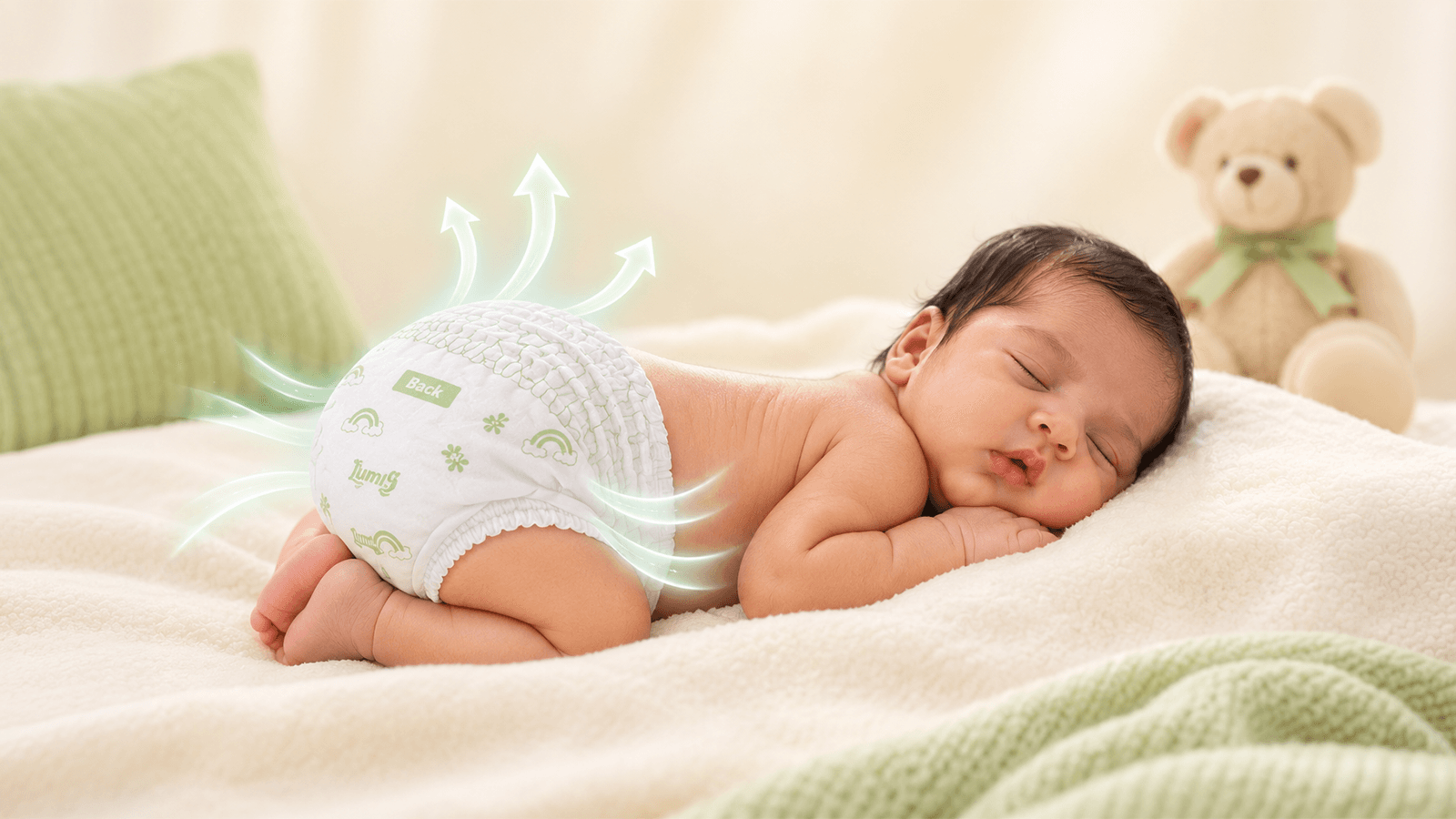
A Breathable Back sheet lets warm, moist air out, so the skin stays cooler. A Cloud-Soft Cotton Touch top sheet feels gentle on damp skin.
Fast Absorption to Limit Wetness
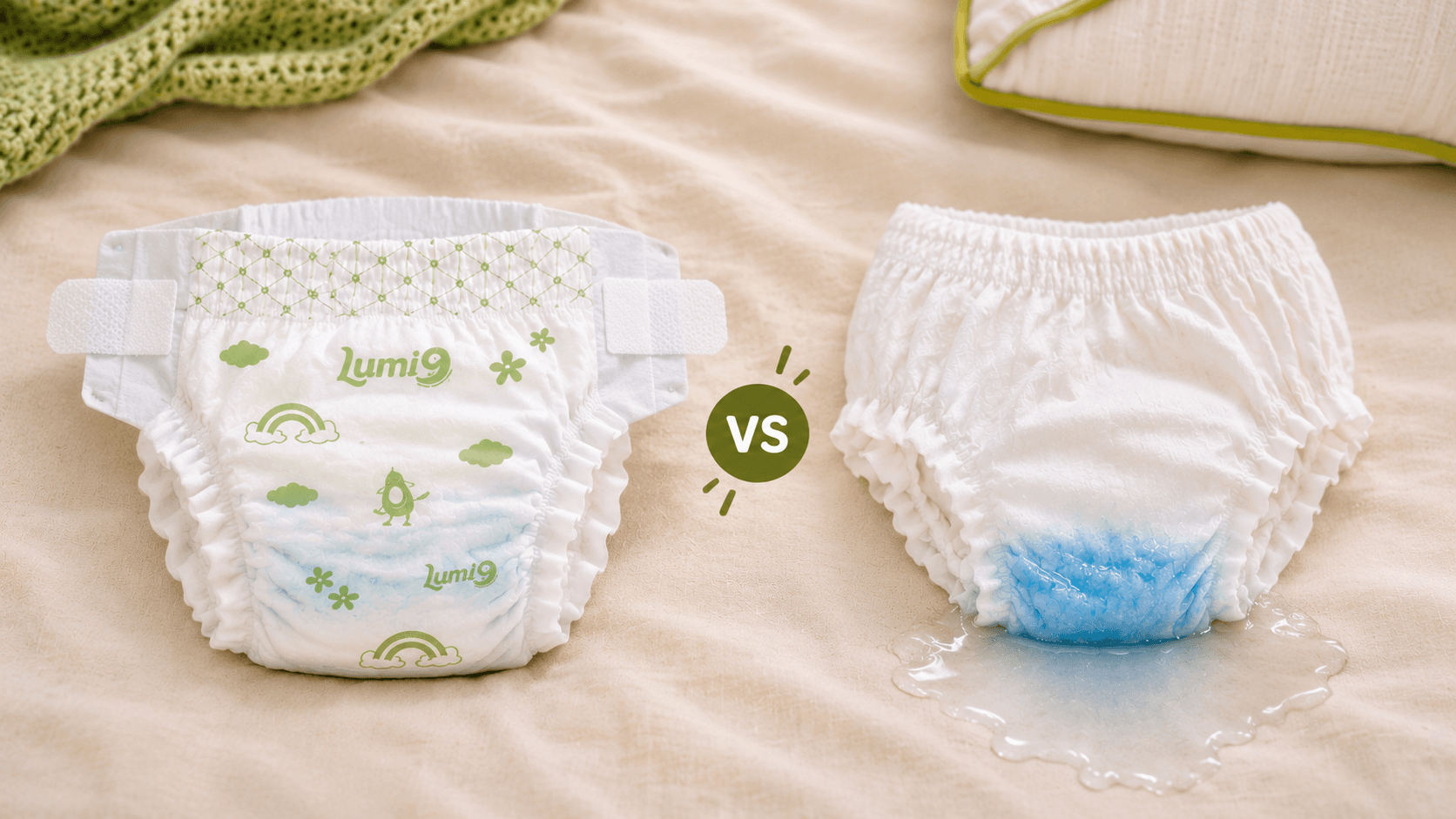
Lumi9's Advanced Absorption Core with ADL spreads liquid evenly and locks it away quickly, while Aloe Vera helps keep skin soft. A Wetness Indicator tells you when it's time to change.
A Correct Fit to Stop Leaks
A Secure Stretch-Fit waistband with a Double Leakage Barrier and Triple Leak Guard keeps leaks in without pressing on the skin.
About Rash-Free and Chemical-Free Claims
Many parents look for a rashes free baby diaper or a chemical free baby diaper in monsoon. No diaper can promise zero rash, so always read a product's material details yourself. A breathable, fast-absorbing diaper in the right size, changed on time, is what lowers the risk.
Choose the Right Size and Overnight Protection
A size that's too tight traps more heat and rubs; one that's too loose leaks. Choose by weight and check the size chart:
NB diapers (tape style) — up to about 5 kg
Small pants — 4–8 kg
Medium size baby diapers — 7–12 kg
Large size baby diapers — 9–14 kg
XL size baby diapers — 12–17 kg
Monsoon nights are long and muggy. Lumi9 diapers offer 12+ hours of protection, so your baby can sleep through without a wet, heavy diaper.
Simple Monsoon Diaper Care Tips
Quick Tip In humid weather, change a little more often than usual, and give your baby a few minutes of diaper-free time to let the skin air-dry before the next diaper goes on. |
Pat dry, don't rub. Damp skin is easier to irritate.
Keep the room airy. A fan or open window helps sweat evaporate.
Store diapers dry. Keep packs sealed and away from damp walls or floors.
Watch the skin. If redness doesn't settle in a few days, see your paediatrician.
Why Parents Choose Lumi9 in Monsoon
When you're comparing the best diaper brand for humid weather, look at how breathability, absorption and fit work together. Lumi9, from Femi9, combines all three, so your baby stays drier and more comfortable through the wettest weeks of the year.
The Bottom Line
Monsoon brings humidity, sweat and extra wetness, but your baby doesn't have to spend the season uncomfortable. Choose a breathable, fast-absorbing diaper in the right size, change a little more often, and let the skin breathe. Explore the Lumi9 range to find the right fit for rainy days and nights.
Related Reading
Breathable Baby Diapers — why airflow matters
Rash-Free Baby Diapers — choosing for sensitive skin
Leak-Proof Baby Diapers — what really prevents leaks
Best Diapers for a Good Night's Sleep — overnight comfort
External References
Mayo Clinic — Diaper Rash: Symptoms & Causes
American Academy of Pediatrics / HealthyChildren.org — Changing Diapers
Frequently asked questions
- Which is the best baby diaper for monsoon?
- The best baby diaper for monsoon is breathable, fast-absorbing and the right size. Lumi9 combines a Breathable Back sheet, an Advanced Absorption Core with ADL and Aloe Vera, and a Double Leakage Barrier.
- Why does my baby get more diaper rash in monsoon?
- Humidity adds sweat to wetness, so the skin stays damp and warm for longer. Lumi9 diapers use breathable materials and fast absorption to help reduce that moisture.
- How often should I change diapers in humid weather?
- A little more often than usual: every 2 to 3 hours, and straight away after poop. Lumi9's Wetness Indicator shows when a change is due.
- Are pants or tape diapers better in monsoon?
- Tape diapers suit new born, and pants suit active babies. Lumi9 offers NB tape diapers up to about 5 kg and pants from Small to XL, so you can choose by weight and stage.
- How do I stop overnight leaks in monsoon?
- Choose the right size, check the leg cuffs before bed and use a diaper with long-lasting absorption. Lumi9 offers 12+ hours of protection for longer nights.
- Is there a rash-free or chemical-free diaper for monsoon?
- No diaper can guarantee zero rash, and parents should check a product's materials. Lumi9 focuses on breath-ability, softness and fast absorption to help keep skin comfortable.